
The Article 6 market
A new market is going live
Our Article 6 Radar has aggregated >1,775 Article 6 headlines since January 2025. The UNEP Copenhagen Climate Centre Article 6 Pipeline holds 6,541 data points (Oct. 2026). The Article 6.4 Supervisory Body has adopted its first methodology and approved the first issuances under the Paris Agreement Crediting Mechanism (PACM), and the first large sovereign ITMO transactions are expected to close at COP31.
Market indicators
Source: Executive Summary · October 2026
Demand
Growth compounds to 2030 and 2050
Article 6 global demand is driven by national compliance (NDC and/or EU Targets), companies and investors that want internationally compliant credits (highest integrity), and other compliance schemes: CORSIA’s need for authorised, adjusted units. SBTi has validated targets for 12,092 companies, each a potential Article 6 developer, buyer or investor. The market is estimated at $180bn by 2050 (Bloomberg NEF, 2025--base model & min carbon price).

- >700 Mt · Trafigura / Oxford Institute for Energy Studies · 2030 floor
- 7.2 Gt · Bloomberg NEF base case · 2050
Estimations, graphs based on Bloomberg NEF (2025) and Trafigura / Oxford Institute for Energy Studies (2025). Forward-looking scenarios, not trading volume.
The gap
Nobody speaks for Article 6 alone
The established carbon market bodies grew up around the voluntary carbon market (VCM). IETA covers all emissions trading; ICVCM and VCMI set voluntary-market integrity and claims rules. Government groups such as the Article 6 Ambition Alliance, Japan’s A6IP Center and the regional carbon market alliances serve states, not market participants. Article 6 Network is the carbon market voice of the Paris Agreement.
Article 6 Network fills the gap. Banks, companies, developers and host governments get a shared, dedicated network. Its mission: make Article 6 the default carbon market for governments, investors and companies.
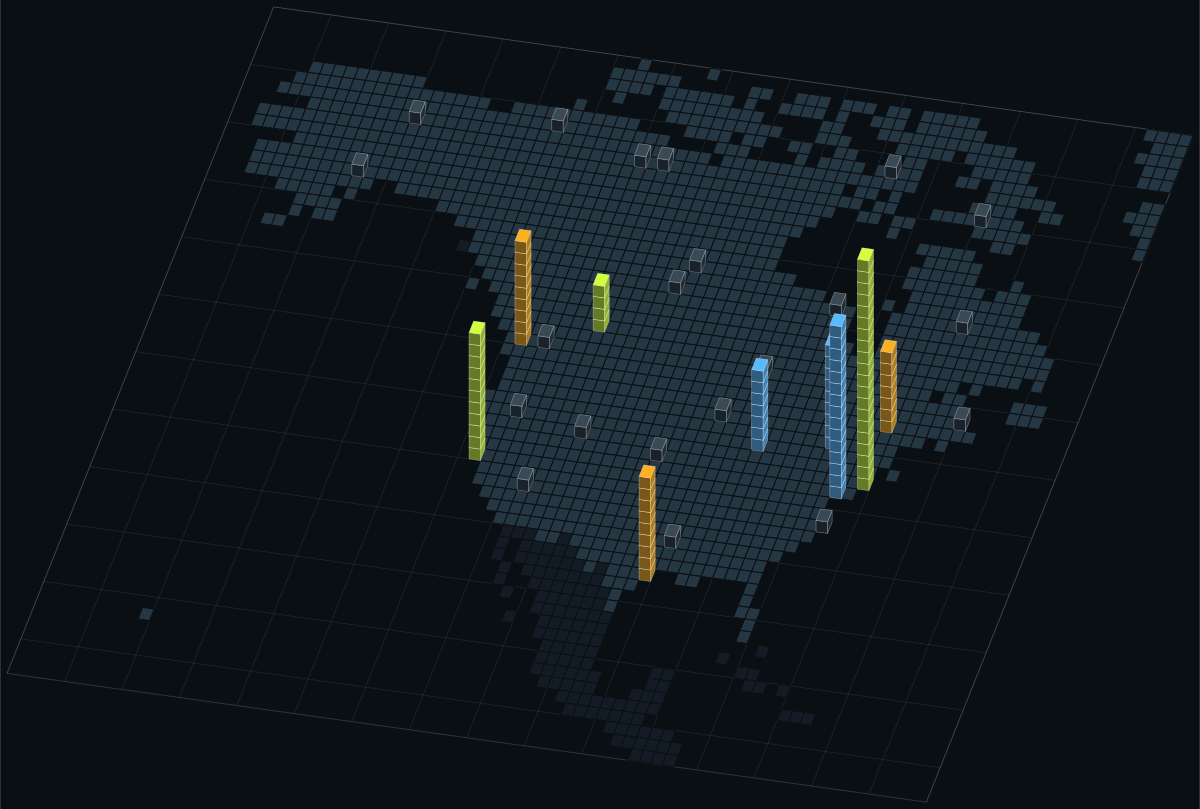
Agreement tracker
Bilateral agreements and activities
Search host or buying country and filter by agreement type. Records from the supplied bilateral agreement database are listed newest first, with links to their sources.
Database snapshot · 20 October 2026 · 113 records. Open the source database. Agreement dates and types are reproduced as listed; operational status, sectors and transfer volumes are not specified in this tab.
Showing 1–20 of 113 agreements
| Host country | Buying country | Agreement type | Date | Source |
|---|---|---|---|---|
| Lao People's Democratic Republic | Singapore | Implementation Agreement | Source ↗ | |
| Kenya | Norway | Other | Source ↗ | |
| United Republic of Tanzania | Singapore | MoU | Source ↗ | |
| Sweden | Switzerland | MoU | Source ↗ | |
| Morocco | Norway | Implementation Agreement | Source ↗ | |
| Viet Nam | Japan | MoU | Source ↗ | |
| Philippines | Singapore | Implementation Agreement | Source ↗ | |
| Bolivia (Plurinational State of) | Republic of Korea | MoU | Source ↗ | |
| India | Republic of Korea | MoU | Source ↗ | |
| Oman | Japan | MoU | Source ↗ | |
| Pakistan | Norway | Implementation Agreement | Source ↗ | |
| Georgia | Republic of Korea | Implementation Agreement | Source ↗ | |
| Brazil | Switzerland | MoU | Source ↗ | |
| Brazil | Singapore | MoU | Source ↗ | |
| Senegal | Norway | Implementation Agreement | Source ↗ | |
| Mongolia | Switzerland | Implementation Agreement | Source ↗ | |
| Zambia | Switzerland | Implementation Agreement | Source ↗ | |
| Ethiopia | Singapore | MoU | Source ↗ | |
| Malawi | Singapore | MoU | Source ↗ | |
| Mongolia | Singapore | Implementation Agreement | Source ↗ |
Lao People's Democratic Republic × Singapore
Implementation Agreement ·
Source ↗Kenya × Norway
Other ·
Source ↗United Republic of Tanzania × Singapore
MoU ·
Source ↗Sweden × Switzerland
MoU ·
Source ↗Morocco × Norway
Implementation Agreement ·
Source ↗Viet Nam × Japan
MoU ·
Source ↗Philippines × Singapore
Implementation Agreement ·
Source ↗Bolivia (Plurinational State of) × Republic of Korea
MoU ·
Source ↗India × Republic of Korea
MoU ·
Source ↗Oman × Japan
MoU ·
Source ↗Pakistan × Norway
Implementation Agreement ·
Source ↗Georgia × Republic of Korea
Implementation Agreement ·
Source ↗Brazil × Switzerland
MoU ·
Source ↗Brazil × Singapore
MoU ·
Source ↗Senegal × Norway
Implementation Agreement ·
Source ↗Mongolia × Switzerland
Implementation Agreement ·
Source ↗Zambia × Switzerland
Implementation Agreement ·
Source ↗Ethiopia × Singapore
MoU ·
Source ↗Malawi × Singapore
MoU ·
Source ↗Mongolia × Singapore
Implementation Agreement ·
Source ↗
How it works
From agreement to transfer
The lifecycle of an Article 6.2 cooperative approach, in five steps.
- 01
Agreement
Partner countries sign a bilateral framework setting out eligibility, authorisation and transfer terms.
- 02
Authorisation
The host country authorises specific mitigation outcomes for international transfer and use.
- 03
Mitigation
Activities are implemented, monitored and verified against approved methodologies.
- 04
First transfer
ITMOs move between registries; the host applies a corresponding adjustment to its emissions balance.
- 05
Reporting
Parties report through initial reports, annual information and regular information to the UNFCCC.
Glossary
Speak fluent Article 6
The Article 6 Academy teaches all of it.
- ITMO
- Internationally transferred mitigation outcome: a unit of emission reduction or removal transferred between Parties under Article 6.2.
- Corresponding adjustment
- An accounting entry that ensures a transferred reduction is counted only once, by the acquiring Party, not also by the host.
- Authorisation
- The host country’s formal approval for mitigation outcomes to be transferred and used for specified purposes.
- PACM
- The Paris Agreement Crediting Mechanism under Article 6.4, overseen by the Supervisory Body. Its credits are A6.4ERs.
- CORSIA
- ICAO’s carbon offsetting scheme for international aviation, which needs authorised, adjusted units.
- NDC
- Nationally determined contribution: each country’s climate target under the Paris Agreement, and the main driver of Article 6 demand.
Sources · Carbon Pulse; UNEP Copenhagen Climate Centre Article 6 Pipeline; SBTi Target Dashboard; A6 Ratings (drawing on BNEF and Trafigura / OIES); UNFCCC, The Road to Antalya; Swiss FOEN, Article 6 Ambition Alliance; IGES, A6IP Center; OneStopESG, Road to COP31.
Join
Get the full Article 6 picture
Members receive Article 6 News in full, The State of the Article 6 Carbon Market report and access to the working groups.